Myocognia

MYOCOGNIA PRESENTS

Heart failure doesn’t wait for your next appointment. Neither should your care.

“Care that keeps moving” · 1:51 · Illustrative: sample data, not a real patient.

Heart Failure Waypoint

Care that keeps moving.

An iPhone app for adults living with heart failure. It brings together more than 30 signals from Apple Health and how you say you feel, learns what is normal for you, and helps you act early, one clear step at a time.

♥ Works with Apple Health Coming soon to iPhone
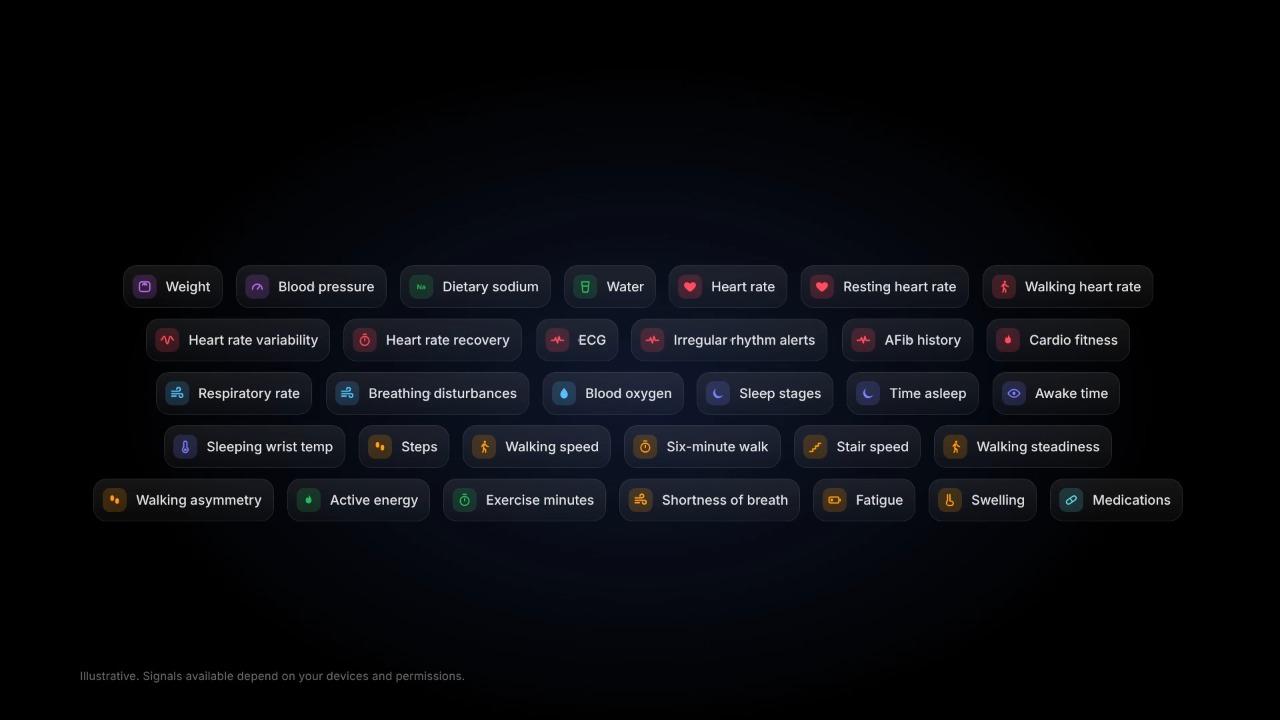
Signals Waypoint can read: weight, blood pressure, sodium, water, heart rate, resting and walking heart rate, heart rate variability and recovery, ECG, irregular rhythm alerts, AFib history, cardio fitness, breathing rate, breathing disturbances, blood oxygen, sleep, wrist temperature, steps, walking speed, six-minute walk, stair speed, walking steadiness and more.
All day, sensed on your wrist

More than 30 signals.

Weight, blood pressure, heart rhythm, breathing, blood oxygen, sleep and how you walk, from your Apple Watch, iPhone, scale and cuff through Apple Health, plus your daily check-in.

Apple Health data stays on your iPhone.

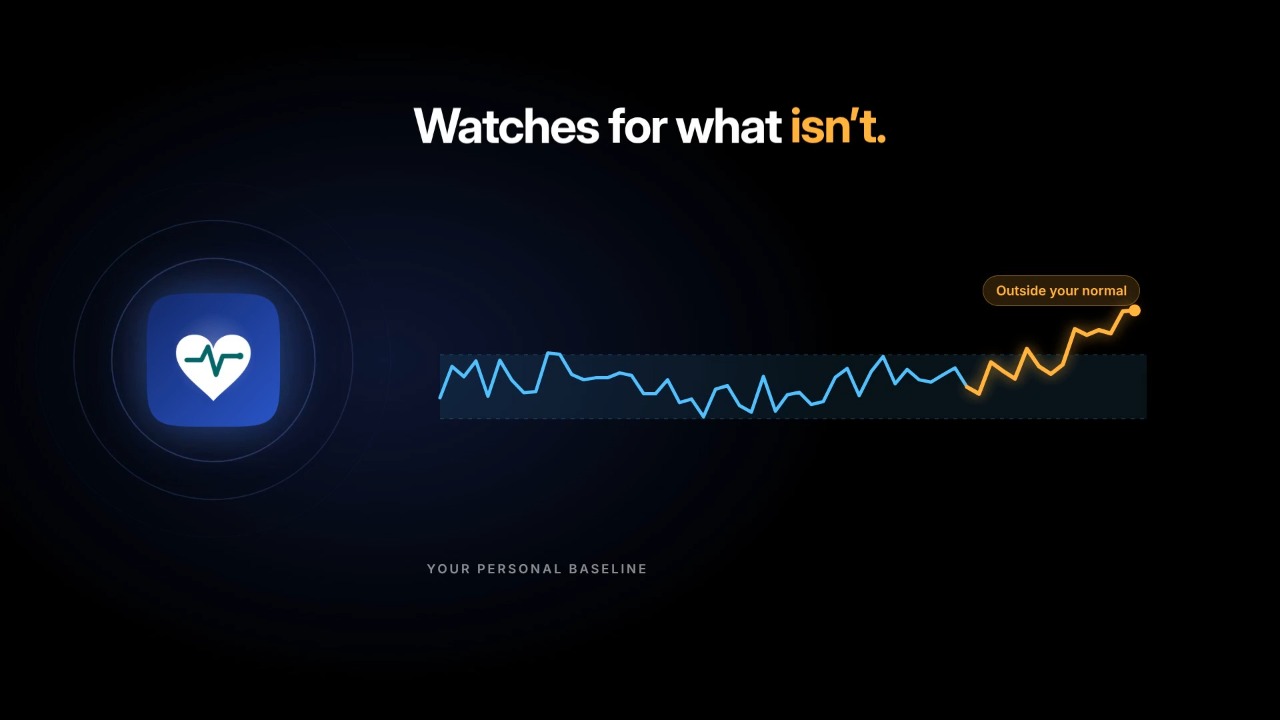
A line moving inside a band labelled your personal baseline, then rising outside it, marked outside your normal.
Your personal baseline

Learns what’s normal for you. Watches for what isn’t.

Every signal is compared with your own usual from the weeks before, not with someone else’s average. A change has to last before Waypoint says anything.

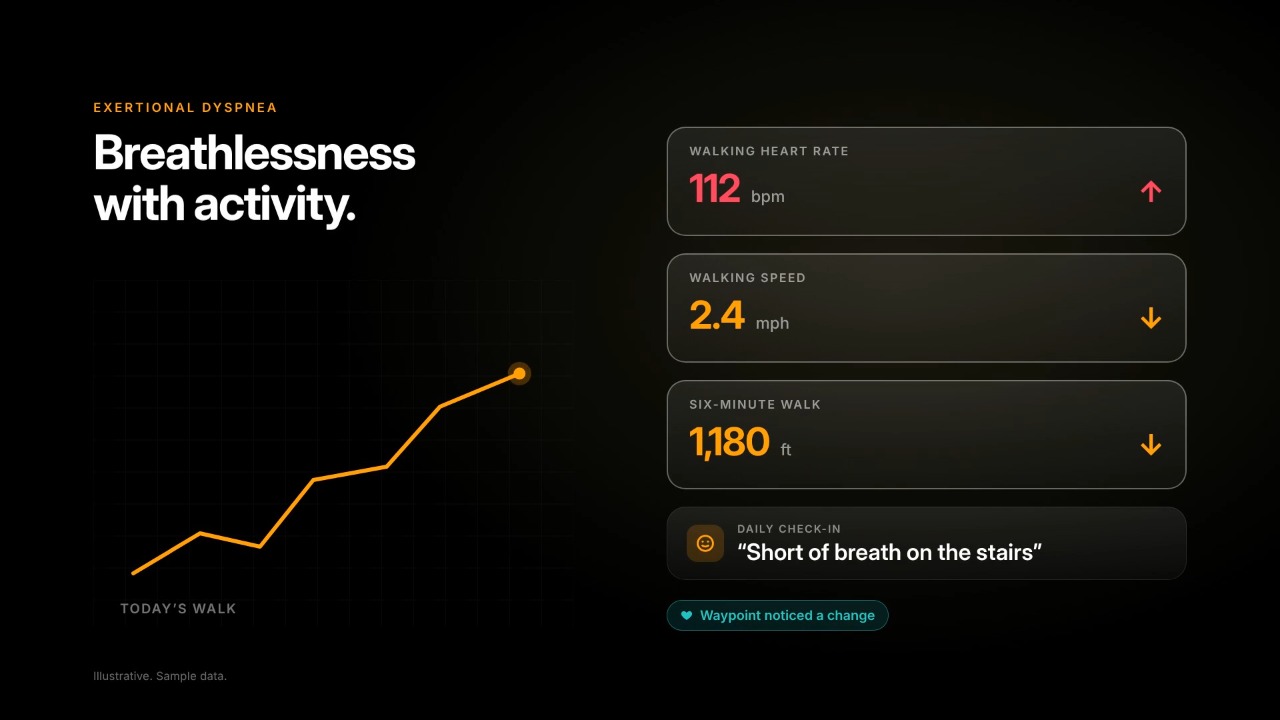
Breathlessness with activity: walking heart rate up to 112, walking speed down to 2.4 miles an hour, six-minute walk down to 1,180 feet, and a check-in saying short of breath on the stairs.
Breathlessness with activity

When a walk takes more out of you.

Your heart rate climbs faster, your pace slows, stairs get harder. Together with what you tell Waypoint in your check-in, it notices the change and asks you to check in.

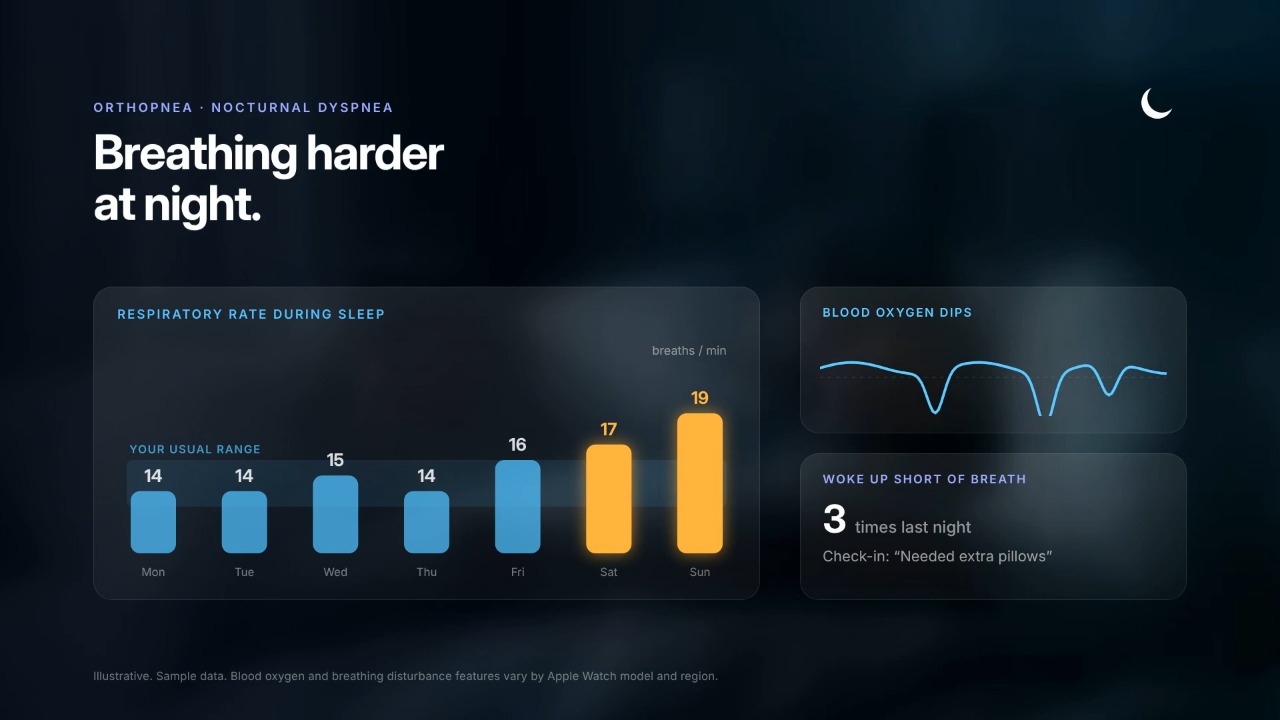
Breathing harder at night: breathing rate during sleep rising from 14 to 19 breaths a minute, blood oxygen dips, and waking up short of breath three times, with a check-in saying needed extra pillows.
Breathing harder at night

Quieter signs, while you sleep.

Faster breathing in sleep, dips in blood oxygen, waking up short of breath, needing extra pillows. Patterns like these can be an early sign that fluid is building, so Waypoint tells you to call your care team.

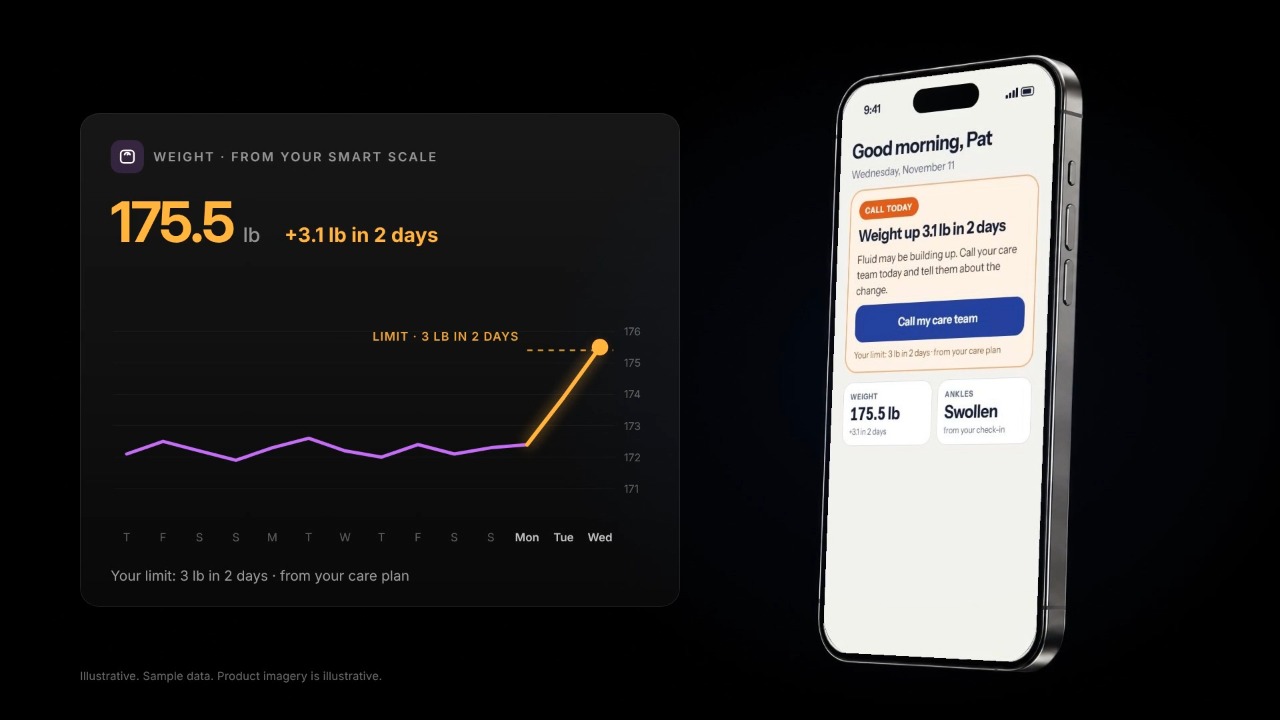
A weight chart from a smart scale rising 3.1 pounds in 2 days, past the care plan limit of 3 pounds in 2 days, and the Waypoint Today screen saying call today.
Smart scale + Apple Health

Your weight, every morning. A sudden gain can mean fluid, not fat.

When a gain crosses the limit in your care plan, Waypoint says so plainly, and puts a button to call your care team right there.

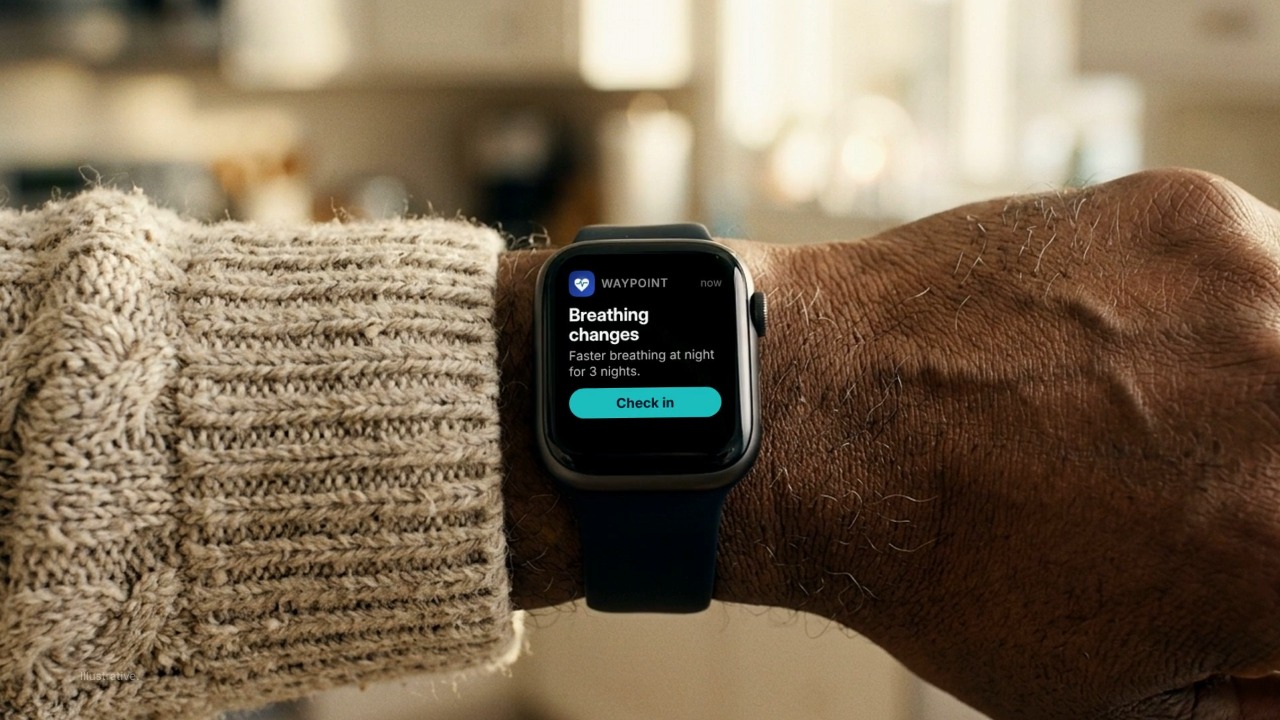
An Apple Watch on a wrist showing a Waypoint notification: Breathing changes. Faster breathing at night for 3 nights. Check in.
When the signals add up

A nudge on your wrist, then a quick check-in.

Waypoint checks new Apple Health data even when it is closed. When something needs your attention, a notification arrives on your iPhone and Apple Watch.

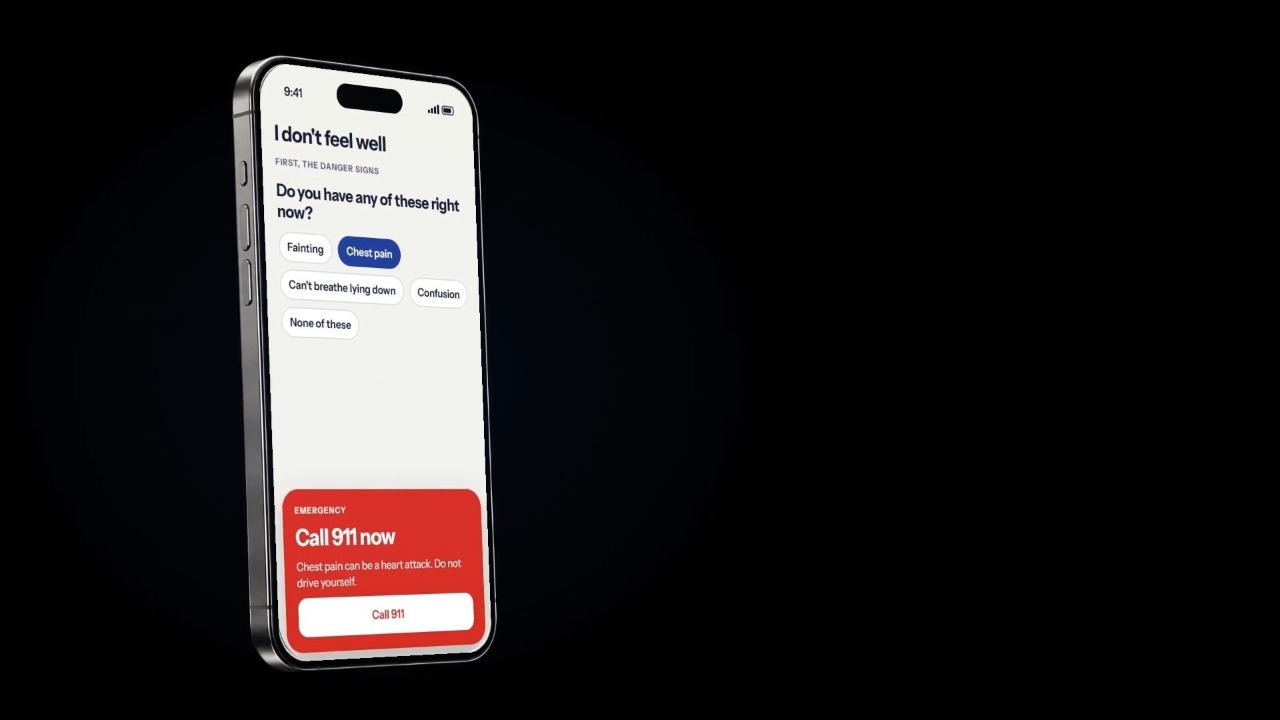
The I don't feel well screen asking about danger signs first: fainting, chest pain, can't breathe lying down, confusion, with a red Call 911 now card.
If it could be an emergency

Danger signs first. Every time.

“I don’t feel well” starts with the questions that matter most. If your answers point to an emergency, Waypoint tells you to call 911.

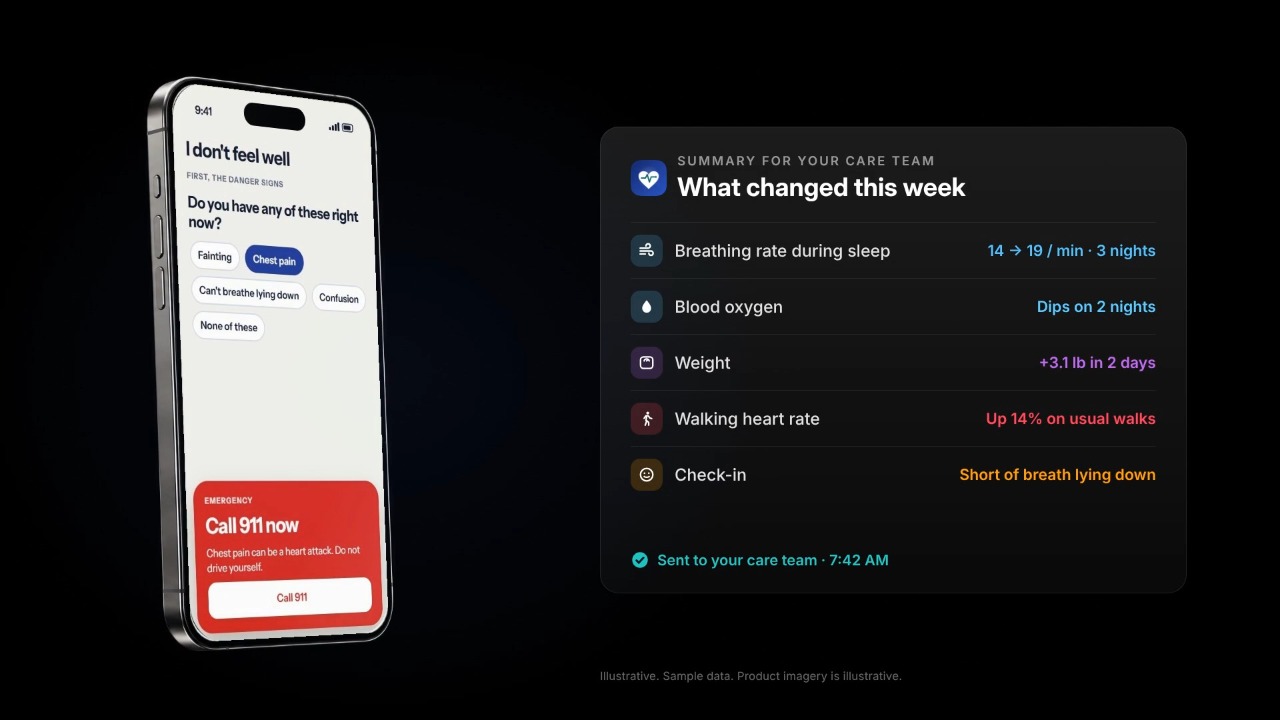
Summary for your care team, what changed this week: breathing rate during sleep 14 to 19 a minute on 3 nights, blood oxygen dips on 2 nights, weight up 3.1 pounds in 2 days, walking heart rate up 14 percent, and a check-in saying short of breath lying down.
Summary for your care team

What changed this week, in one clear picture.

Waypoint lists what changed against your own usual, and you send it to your care team from your phone, so they can act sooner. You choose where it goes.

The team

Built by people who know the clinic.

Myocognia builds healthcare technology inspired by real clinical needs, where medicine, technology and innovation meet.

Moiz Shaikh

Moiz Shaikh

Founder, Myocognia

I’m Moiz Shaikh, a 23-year-old final-year medical student, founder of Myocognia, and aspiring cardiologist.

My journey into medicine wasn’t conventional. I started in Computer Science, pursued Commerce, and eventually found my calling in medicine. Along the way, a year of research fellowship strengthened my interest in scientific innovation.

Today, I’m bringing those worlds together through Myocognia, building healthcare technology inspired by real clinical needs. I developed Heart Failure Waypoint: I designed and built the app, and worked on its algorithms, including the warning checks that turn Apple Health readings into early signs that heart failure may be getting worse.

I’m not just pursuing a career in medicine. I’m building one at the intersection of medicine, technology, and innovation.

Dr. Hamza Naveed

Dr. Hamza Naveed

Founder, Myocognia

Dr. Hamza Naveed is an internal medicine physician and Cardiac Amyloidosis Fellow at the University of Chicago and Endeavor Health. A graduate of Gujranwala Medical College, he completed his internal medicine residency at the University of Houston/HCA Houston Healthcare Kingwood and has built an impressive portfolio in cardiovascular research, clinical education, and leadership.

With numerous cardiology publications, research contributions, and a passion for advancing patient care, Dr. Naveed brings clinical expertise and academic insight to Myocognia. As a Founder, he is helping bridge the gap between clinical medicine and innovative healthcare technology, shaping solutions grounded in real-world patient needs.
Get in touch

More than 30 signals. One clear picture.

For questions, partnerships or press, write to myocognia@gmail.com.

In an emergency, call 911. Heart Failure Waypoint is not a medical device. It does not diagnose or treat any condition and does not replace your care team. Its checks use draft limits that have not been clinically validated.